Gondar, the 17th century capital of Ethiopia, is located about 748 km North Western of Addis Ababa. The city is well 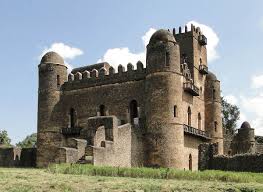 known for its Castles and churches .Its medieval glory is reflected in the famous castles of the emperors of the time, especially that of Emperor Fasiledas.The Castles of Gondar are today the most visible expression of the relatively near past history of Ethiopia.
The castles of king Fasil’s legacy dated back to the 17th century AD. There exists no instance of this kind in Africa, often described as the Camelot of Africa, Fasil compound/ Fasil Gheebi / served as the royal residence of Ethiopian Emperor Fasiladas and his successors at a time, when Gondar was the country’s capital. Enclosed within the 900-meter long wall are crenellated castles, palaces, churches and other buildings, some of them still intact enough to give an excellent impression of the Era. Just outside the fortress city, there is another fine building sometimes associated by Fasiledas, a bathing place which is filled with water these days once a year to commemorate the Ethiopian Epiphany / Timiket / festival. Around the famous royal compound, visitors are encouraged to visit the ruins of the 18th century palace of Empress Mintiwab and the spectacular church of Debre Birhan Selassie which is still incredibly graceful in its magnificent paintings.
Lower Omo Valley
The Lower Valley of Omo is located in South-Western Ethiopia. The age old sedimentary deposits in the Lower Omo Valley are now world renowned for the discovery of many hominid fossils, that have been of fundamental importance in the study of human evolution.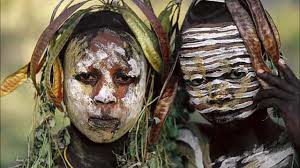
Ancient tools and hominid fossils dating back 2.4 million years ago have been discovered there. The area is also home to a huge cultural diversity of people. The Lower Valley of Omo is one of the unique places in the world in that so many various cultures inhabit such a relatively small piece of land.
The Rock-Hewn Churches of Lalibela
The churches which are carved out of solid rock have fascinating internal channels and walls full of religious
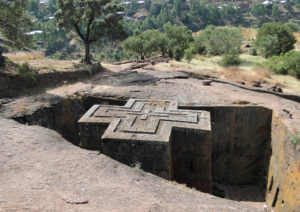
symbols.These amazing edifices were not constructed as such, but were chipped out of solid rock with only hammers and chisels. The churches of Lalibela indicate the architectural mastery and religious devotion of king Lalibela who is believed to have built them. It is the site of eleven remarkable rock hewn churches believed to have been built in the late 12th or early 13th century. The town was originally called Roha, but was renamed after king Lalibela who commissioned the churches.
The Walled City of Harrar
The city of Harrar, one of the oldest cities in the country, was founded in the 7th c
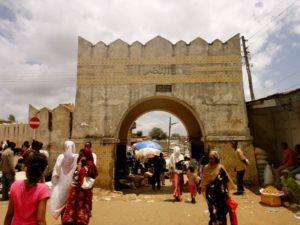
entury A.D Harrar was a major trading crossroad and a center of Islamic learning. Fortified against invaders, its provocative five gate wall (Jugol) was built between the 13th and 16th centuries.
The town is famous for unique layout of its houses, its intricate basketry, coffee and hyena feeding.The narrow winding streets of Harrar contain over 99 mosques and are considered as the fourth holiest city of Islam, next to Mecca, medina and Jerusalem.
The Stelae of Axum
Truly; Aksum was ahead of its time. Unlike many other state of the time, Aksumites knew how to tame animals,
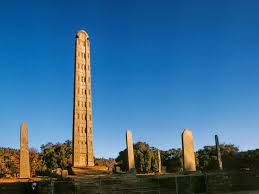
cultivate cereals, mint coins and curve extraordinary obelisks which are unknown to human kind.They accepted Christianity early, developed their unique Alphabet and created a peculiar system of composing and chanting religious hymns. Indeed, Aksum was the most inventive state of its time, shaped and reshaped by profound faith, sophisticated administration, boundless prosperity and artistic and engineering brilliance. In terms of its sanctity as well as greatness of its empire, Aksum is like Jerusalem and Rome combined .In essence, Aksum is faith, holiness, history and tranquility all wrapped in one.
Presently, Aksum houses seven giant stealea, some of them are fallen. One of the obelisks was taken to Rome where it was installed for many years. And it has been returned to Ethiopia and re-erected on its original place in Axum. The ruins of the Queen of Sheba’s palace, as well as the Ark of the Covenant are found in Axum. These days Axum is considered as one the holiest destinations of many Christian pilgrimages.
The Semien Mountains National Park
Established in 1969 and made a UNESCO World Heritage Site nine years later , the 220km sq Semein Mountains National Park protects the western part of the eponymous mountain range , a serious of incised plateau characterized by sheer 1,000m-high cliffs and rugged pinnacles and buttresses.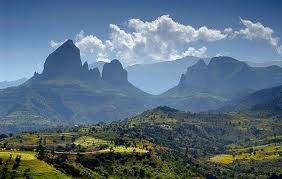
The range includes at least a dozen peaks that top the 4,000m mark, among them the 4,620m Ras Dashen ,which is the fourth–highest mountain in Africa.Situated about 100km north of Gonder and best assessed from the small town of Debark, the park is best known for stupendous scenery lauded Rosita Forbes as ‘the most marvelous of all Abyssinian landscapes’, but it is also the most important stronghold for the endemic Gelada Baboon,Walia Ibex and Abyssinian Wolf, as well as hosting one the world’s densest populations of the spectacular bearded vulture(wammergeyer), which is frequently seen at close range at the campsites.
Tiya Stones
Tiya is among the most important of the roughly 160 archaeological sites discovered so far in the Soddo area, south of Addis Ababa.
The pre historic site of Tiya in Southern Ethiopia houses 36 obelisks, including 32 carved stelae covered with 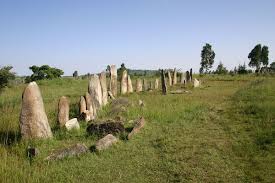 symbols, believed to be ancient tomb stones. According to UNESCO, these are the remains of ancient Ethiopian cultures whose age has not yet been precisely determined. The erection of megalithic monuments such as those is a very ancient tradition in Ethiopia. These obelisks are not soaring monoliths as in Axum, but they contain depictions of swards and various symbols not found in other regions.
The carved monoliths vary in size from 1 m to 5 m. Their forms fall into several distinct categories: figurative composition, anthropomorphic, hemispherical or conical, simple monoliths. In the northern area are to be found stelae with depictions of swords, associated with enigmatic symbols and schematic human figures.
Lower Awash
Just over the bridge, turn right to follow a dirt road to the archaeological site of Melka Konture. (It is best that you check with the Antiquities Administration in Addis first.) Since 1965, geologists and archaeologists have had a compound here, set up to excavate this area at the entrance to the gorge where, two million years ago, the earliest ancestors of mankind had a home.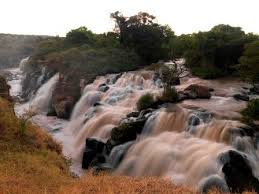
They left behind tools, as well as traces of meals and shelters. In the lowest levels pebble tools have been found and, in the higher levels, men of the Middle and Late Stone Age have left many examples of beautiful two-edged hand-axes, obsidian scrapers, and sets of ‘bolas’ – the round stones used together in nets to throw at animals. Fossilized bones of hippopotamus, rhinoceros, elephant, and various antelope have also been found here.
If you walk upstream along the banks of the river, some of these Stone Age tools can often be seen, particularly in the dry washes. Remember, however, that collecting of Stone Age artefacts is prohibited, and local citizens help to enforce this restriction.
Lucy, 3.5 million years old, and the recent discovery Ramides, 4.4 million years old hominid fossil, are discovered in Haddar, along the Awash River, east of the country. They completed the missing link between Apes and men.
Melka Konture is also an important archeological site where 1.5 million years old stone tools were found. Several cave paintings and stone monuments are found in different parts of the country like Dilla, southern Ethiopia and Dire Dawa, eastern Ethiopia.
Konso Cultural Landscape
Konso Cultural Landscape is a 55 square km arid property of stone walled terraces and fortified settlements in the Konso highlands of Ethiopia. It constitutes a spectacular example of a living cultural tradition stretching back 21 generations (more than 400 years) adapted to its dry hostile environment.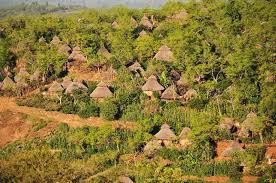
The landscape demonstrates the shared values, social cohesion and engineering knowledge of its communities.The site also features anthropomorphic wooden statues – grouped to represent respected members of their communities and particularly heroic events – which are an exceptional living testimony to funerary traditions that are on the verge of disappearing. Stone steles in the towns express a complex system of marking the passing of generations of leaders.
The cultural properties including the traditional stone wall towns (Paletea), ward system (kanta), Mora (cultural space), the generation pole (Olayta), the dry stone terracing practices (Kabata), the burial marker (Waka) and other living cultural practices are reasons for the precipitation of the Konso cultural landscape to be listed on UNESCO world heritage sites list. All the necessary requirements have completed including, field studies, data collections, nomination file/document and management plan of the Konso Cultural Landscape.
Terrace: The Konso have adapted a terrace agricultural system and the core Konso area is characterized by extensive dry stone terraces.Theses terrace retain the soil from erosion and
create terrace saddles that are used for agriculture. The terraces are the main features of the Konso landscape and the hills are contoured by the dry stone terraces that could reach at some places up to 5m high. The terraces retention walls are built with heavier blocks at the base. The saddles that are prepared for agriculture are between four and eight meters wide at most places
The walled town (Paleta): The Konso live in dry stone walled towns (Paleta) located on high hills selected for their strategic and defensive advantage. The Knoso villages remarkable for the beauty and simplicity of its workmanship, constructed entirely from natural materials, cultivated or constructed from the surroundings. The village is ringed by dry stonewalls, at least a meter thick and three meters high.
Mora: Cultural space of Konso located at the center of the main central enclosure and at different locations with in the walls, and sometimes outside the walls. Paths from all gates lead to these Moras. The individual walled town (Paleta) has up to 17 Moras, which are connected to one other by footpaths. The Moras retain an important and central role in the life of the Konso. They usually have one or two-story grass thatched houses, called Pafta. The Mora comprise an open sided sitting area beneath a huge thatched roof with a heavy wooden ceiling and above the ceiling there is therefore an ;ittic’ the ground floor of the Mora is expertly paved to form a public area where the men gather to govern the village life. It is also a place for recreation, the youth may gather here to play chat and relax during the day when they are not working. The attic of the Mora meanwhile is where all the adult men are obliged to slip at night. They have a responsibility to protect the villages from various an expected incidences such as fire and any other attack.
]]>
Being home to the African Union, having important United Nations branches, and with nearly every foreign embassy from around the world represented, Addis Ababa is often referred to as the capital of Africa. Located in the beautiful Ethiopian highlands, Addis Ababa is positioned at 2,665 meters in elevation, making the weather extremely pleasant, if not a bit on the cool side.
From the marvelous array of local and international food, some of the best coffee you’ll ever have in your life, to ancient churches, and fascinating museums, there are plenty of things to keep you occupied and satisfied in Addis Ababa.
If you’re staying at the Mosaic hotel, you’re right at the heart of all the attractions.
1. Addis Mercato
It’s crowded, it’s chaotic, but the Addis Mercato is so incredibly entertaining and full of life and character, that walking around is one of the best things to do in Addis Ababa.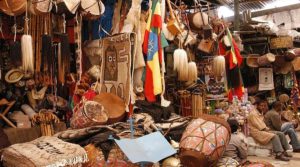
The Mercato, coming from the Italian word for market, claims to be the largest open air market in Africa. There are so many different sections of the market and you can buy everything from souvenirs to clothes to food. That being said, it’s also a great place to buy nothing and just go to watch the crowds of people and observe the incredible loads being carried from place to place.
Do be careful, just like any busy place in the world, don’t carry an unnecessary amount of belongings, and take care of your pockets. I personally thought the security was pretty good, with plenty of guards and police patrolling, but especially be aware of pickpockets.
2. Meskel Square and Museums
Meskel Square in Addis Ababa is sort of the central gathering place in the city, especially important during festivals and political demonstrations. Meskel Square also is a good point of reference for local transportation and for getting into the center of the city. 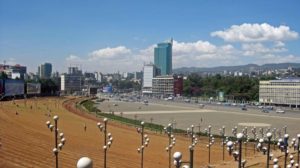
Unless there’s an event taking place at Meskel Square, there’s not a whole lot to do there. However, there is the official Ethiopian Tourism office across the street and there are two museums adjacent to the square, just off Bole Road.
The Red Terror Martyrs Memorial Museum is a small and modern museum showing and explaining the period of “Red Terror” (from 1978-1978) in Ethiopia when countless innocent people suffered. The museum is free entrance. Also next to Meskel Square is the Addis Ababa Museum.
3. Holy Trinity Cathedral (Kidist Selassie) and Museum
While St. George’s Cathedral is one of the most famous in Addis Ababa, the Holy Trinity Cathedral is the most
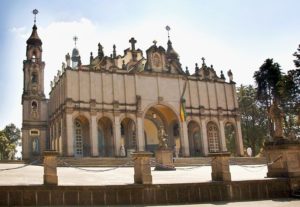
sacred Ethiopian Orthodox church in the city, and one of the most sacred sites of worship in Ethiopia after the churches of Lalibela.
The Holy Trinity Cathedral has a real medieval feel to it, the grounds surrounded by weeping pine trees and the cathedral decorated with statues and carvings.
At the back of the cathedral is another museum, where you can see more Ethiopian historical memorabilia, crowns of former Ethiopian Emperors and a selection incredibly well preserved Amharic Bibles and religious writings.
At the front of the cathedral, if you ask the priest to open the gate, you can see the tomb of Emperor Haile Selassie.
Price – 50 ETB entrance including the museum
4. National Museum of Ethiopia
In my opinion, this is one of the best museums in Addis Ababa. The facility is home to many of the most significant
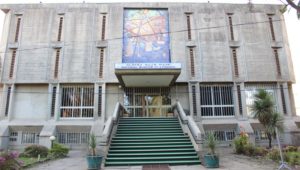
relics and pieces of artwork from around the country. I also enjoyed the variety of different art and displays.
First of all, the National Museum of Ethiopia has a good collection of archaeology, like precious steel and statues from Axum. You’ll also find skeletal remains from early hominids, and a model of the famous “Lucy.”
Up a floor there’s a good collection of royal family memorabilia from the former emperors of Ethiopia. There’s also a good selection of some Ethiopia’s most famous works of art.
Price – 10 ETB
5. Ethnological Museum
Just a short distance from the National Museum of Ethiopia, located within the lush university campus, is the Ethnological Museum. If you’re into museums, both the National and Ethnological Museums shop be priorities on you list of things to do in Addis Ababa.
The museum first introduces some of the major tribes of Ethiopia, goes through the history and importance of coffee in Ethiopian culture. There’s also an impressive collection of Ethiopian Orthodox paintings, triptychs, and Orthodox crosses.
6. Edna Mall and Bole Medhane Alem Cathedral
Bole Sub-city of Addis Ababa is a modern trendy district of town, packed with shopping centers, the Edna Mall cinema, condos, hotels, and plenty of both international and upscale Ethiopian restaurants. You’ll find plenty of Ethiopian cultural restaurants, the most famous being Yod Abyssinia. I tried it out for lunch, it was actually pretty good and not too overpriced (though dinner might be different?).
Across the street from the fancy shopping center is the Bole Medhane Alem Cathedral, the largest Ethiopian Orthodox church in Addis, and the second largest church in Africa.
The Bole District, home also to the international airport, is a good area of town stay in when you’re in Addis Ababa.
7. Ethiopian Food
I’m going to be honest with you, I traveled to Ethiopia with a main purpose to eat Ethiopian food and drink Ethiopian coffee – and neither the food nor the coffee let me down.
First of all, with a gigantic platter of a feast placed before you, and eating with your hands, eating is just so extremely fun in Ethiopia. The staple is injera, a spongy great pancake made from teff grain flour. It’s fermented to become sour, and feels like a pancake.
Along with injera, Ethiopian food consists of spice filled curries, vegetables, and lots of meat (if you choose it). Eating Ethiopian food is easily one of the best things to do in Addis Ababa.
]]>
WHEN TO VISIT
High Season in Ethiopia starts from mid October to January, when the rainy season end but the countryside is still luscious and green. This is the peak tourist season, so hotels and sites of interest tend to be busier than usual. It is well worth aiming to be in Lalibela or Gondar for Timkat (Ethiopian Epiphany), a wonderfully colourful celebration held on 19 January (except on leap years).
The late dry season, from February to May, is also a great time to visit, though the scenery tends to become dryer towards the end of this period, except in the far south where the first rains often fall as early as April.
The late rainy season, from September through to early October, is a lovely time of year. There’s a significant drop in precipitation over this period, but the countryside is very green, and punctuated by yellow meskel wild flowers. On 27 September (a day later in leap years), Ethiopia erupts into festival mode to celebrate Meskel, which commemorates the finding of the True Cross more than 1600 years ago.
Low Season which is the also the rainy season starts around July and August in the central and northern highlands. Highland towns such as Gondar, Lalibela and Addis Ababa can be very damp and cool during the rains. The countryside is also very green and scenic during the rains, and you’ll encounter fewer tourists at popular sites such as Lalibela.
.
WHERE TO STAY
The Mosaic hotel is located in the heart of Addis Ababa just a few km from the Airport. Warm and friendly service, a comfortable bed, good food and entertainment, all at an affordable price! We love being a part of our guests’ memories (and their insta feeds). Why don’t you come and try us for yourself?
GETTING AROUND
By Air
Ethiopian Airlines has a comprehensive domestic service and if you fly Ethiopian into the country, you can get some excellent discounts on your domestic flights. Scheduled flights include all destinations on the historical route — Axum, Bahr Dar, Gondar, and LALIBELA. You can fly in between these destinations rather than heading back to Addis Ababa for a connection. {p] Most other domestic flights originate from Addis Ababa and include the following destinations: Arba Minch, GAMBELA, DIRE DAWA, JIGIGA, MEKELE, and DEBRE MARKOS. For more information, destinations and to book flights see the Ethiopian Airlines website.
By Bus
There are many bus companies in Ethiopia and between them; they cover all the major towns. All the long-distance buses will leave early in the morning. Plan to get to the bus station by 6am. You can book your tickets in advance on most of the longer journeys. Otherwise, you can get your tickets on the day of departure, but beware of touts selling at inflated prices. Our concierge or front desk staff will be more than glad to help you plan your trip.
By Minibuses, Taxis, and Garis
Minibuses and taxis basically cover your transport within the bigger cities and towns, or for short distances between towns. You can recognize minibus taxis by their blue and white coloring scheme. Because minibuses ply a fixed route, the fare should be set. The conductor (woyola) will shout out the final destination. Minibuses are the cheapest way to get around Addis.
Taxis are not metered and you’ll have to bargain for the right fare. Ask the concierge or front desk at the Mosaic hotel what a reasonable fare should be before you set off. In addition, there is a new taxi hailing company similar to UBER called RIDE. Ask the concierge or front desk at the Mosaic hotel to assist you with this service.
Garis are horse-drawn carriages which are a great way to travel in the bigger towns and cities. The ride is cheap, but you’ll have to master the local language to get to where you want to go. A Gari typically holds two passengers.
By Train
Addis Ababa Light Rail is a light rail transportation system .It is the first light rail and rapid transit system in eastern and sub-Saharan Africa. Of the two line rail lines, the east-west line extends stretching from AYAT Village to TORHILOCH, and passing through Megenagna, Meskel Square, Legehar and Mexico Square. The north-south line, passes through Menelik II Square, Merkato, Lideta, Legehar, Meskel Square, Gotera and Kaliti. Trains on the north south line are blue and white, whilst on the east west line they are green and white. The Fares cost 2-6 BIRR. Tickets are bought at orange coloured kiosks next to each station. You can visit the website for maps & details (http://www.erc.gov.et/AddisAbaba-LRT)
The Addis Ababa–Djibouti Railway
The railway begins at the Sebeta Central Station. The city is served by two stations in the outskirts, at Furi-Labu and Indode. The line then runs southeast to Modjo and Adama, both towns located in the Ethiopian Great Rift Valley
At Adama, the railway turns northeast towards Dire Dawa, where it turns and heads directly for Djibouti.
The couch section is divided into regular and VIP sections with regular couch rooms accommodating triple bunk beds namely the upper, middle and lower bunks each with varying fares.Accordingly, a regular seat from Addis Ababa to Adama will cost 68 birr while travelers to Dire Dawa, Elsabeh and Negad will have to pay 308 birr, 459 birr and 503 birr, respectively. Booking the upper bunk bed, one has to pay 91 birr to go to Adama, 410 birr to Dire Dawa, 612 birr to Elsabeh and 671 birr to Negad. For the same distance, commuters have to pay 125 birr, 564 birr, 841 birr and 922 birr to travel to Adama, Dire Dawa, Elsabeh and Negad, respectively, if they decide to book the middle bunk bed. The lower bunks are relatively pricy with 137 birr, 616 birr, 918 birr and 1,006 birr for Adama, Dire Dawa, Elsabeh and Negad, respectively.
With regard to the VIP couch services, with each room accommodating two bunk beds, one has to pay 171 birr, 769 birr, 1,147 birr and 1,258 birr, correspondingly, to travel to Adama, Dire Dawa, Elsabeh and Negad in the upper bunk beds. The lower bunk beds as well cost 182 birr, 821 birr, 1,224 birr and 1,341 birr, respectively, for each of the above mentioned destinations.
Our team at the Mosaic hotel will be more than happy to provide assistance to plan your trip across Ethiopia.
By Car
Touring Ethiopia by car eliminates the lengthy bus journeys somewhat and allows you to see the beautiful scenery which you miss when you fly. Our team at the Mosaic hotel will be more than happy to provide assist you find the right car rental option.
MONEY
The national currency of Ethiopia is the Ethiopian Birr (ETB), with an exchange of 28 to the US$ (October 2018). We advise you to bring most of your funds in cash. US Dollars, Sterling or Euros are all accepted. Visitors may import an unlimited amount of foreign currency but they need to declare amounts exceeding 10 000 USD at the customs upon arrival. At the airport it can be very slow to exchange money but the various banks in Addis Ababa are good options. US Dollars, Sterling or Euros should be clean and free from rips or marks. Travelers cheques issued either by Thomas Cook or American Express can also be changed at the airport, but they can be difficult to cash anywhere else. Outside of Addis Ababa, credit cards are not accepted in most establishments, so it’s better to carry enough cash to last for a few days.
The Mosaic Hotel accepts major credit cards like visa, master card, union pay.
EMERGENCY PHONE NUMBERS
Police
Emergency 911
Federal police +251.11 5512744
Addis Ababa police +251.11 1559122
Traffic Police +251.11 5528222
Police 991
Information
997 International 998
Addis Ababa Ambulance Service
Municipality +251.11 1115348
Red Cross society 907
USEFUL Amharic WORDS
እንኳን ደህና መጣህ። (ənkwan dähna mäṭṭah) male Welcome
እንኳን ደህና መጣሽ። (ənkwan dähna mäṭṭaš) female Welcome
ሰላም። (sälam) Hello
እንደምን አለህ(Endemn Aleh) for Male How are you?
እንደምን አለሽ(Endemn Alesh) for Female How are you
ስምህ ማን ነው፧ (səməh man näw?) What’s your name
ስምሽ ማን ነው፧ (səməš man näw?) what’s your name
የኔ ስም… ነው (yäne səm … näw) My Name is –
ከየት ነህ፧ (käyät näh?) where are you from?
እኔ ከ … ነኝ። (əne kä … näň) I am from
እንደምን አደርክ? (əndämən addärk?)Good Morning
እንደምን ዋልክ? (i’ndemin walik?) Good Afternoon
አንደምን አመሸህ? (indämən amäššäh?) Good Evening
ደህና እደር (dähna där) Good Night
ቻው (chaw) Good Bye
ብላ (bəla) Have a nice meal
ገባኝ (gäbbaň) I understand
አልገባኝም (algäbbaňem) I don’t understand
አላውቅም (alawqəm) I don’t know
እባክህ ቀስ ብለህ ተናገር (əbakəh qässə bəlläh tänagär) Please speak slowly
እባክህ (əbakəh) Please
አመሰግናለሁ (amäsäggänallähw) Thank you
ሽንት ቤት የት ነው? (šəntə bet yätə näw) where is the toilets
ከኔ ጋር መደነስ ትፈልጋለህ። (käne gar mädänäs təfälləgalläh?) would you like a dance with me?
አፈቅርሻለሁ። (əfäqrəšallähw) I love you
ቁም! (qum) stop
መኪና (mäkina) “Car“
ከረሜላ (kärämela) “Sweets“
አናናስ (ananas) “Pineapple
ቢራ (bira) “Beer“,
ቤት (bet) The word for “House
ደቂቃ (däk’ik’a) “Minute
ሰዓት (sä’at) “Hour“, “Watch
ሐሙስ (hamus) “Thursday“
እሑድ (ïhud) “Sunday
አንተ (antä) “You“ (masculine
ቅርብ (k’ïrb) “Near“,
Hopefully you now feel a little less stressed and a lot more excited about your trip to ADDIS!
]]>